
Understanding Kidney Cancer
The Kidneys, Kidney Cancer explained, how to choose treatment & treatment options.
Kidney Cancer Overview
The kidneys are essential organs that filter the blood, removing waste products through the urinary tract as urine. Like any other organ, the kidney can be affected by cancer.
Kidney cancer accounts for around 3% of all cancers diagnosed in Australia each year. The commonest form of cancer is renal cell carcinoma (RCC), which grows from cells lining the microscopic tube system within the kidney.
The cancer can grow slowly over a number of years and because of the kidney’s location in the body, usually causes no symptoms until it becomes quite large. For this reason, RCC is now most often detected incidentally on scans performed for other reasons, and when found at an early stage has an excellent chance of cure with surgical removal.
Developments in kidney cancer treatment
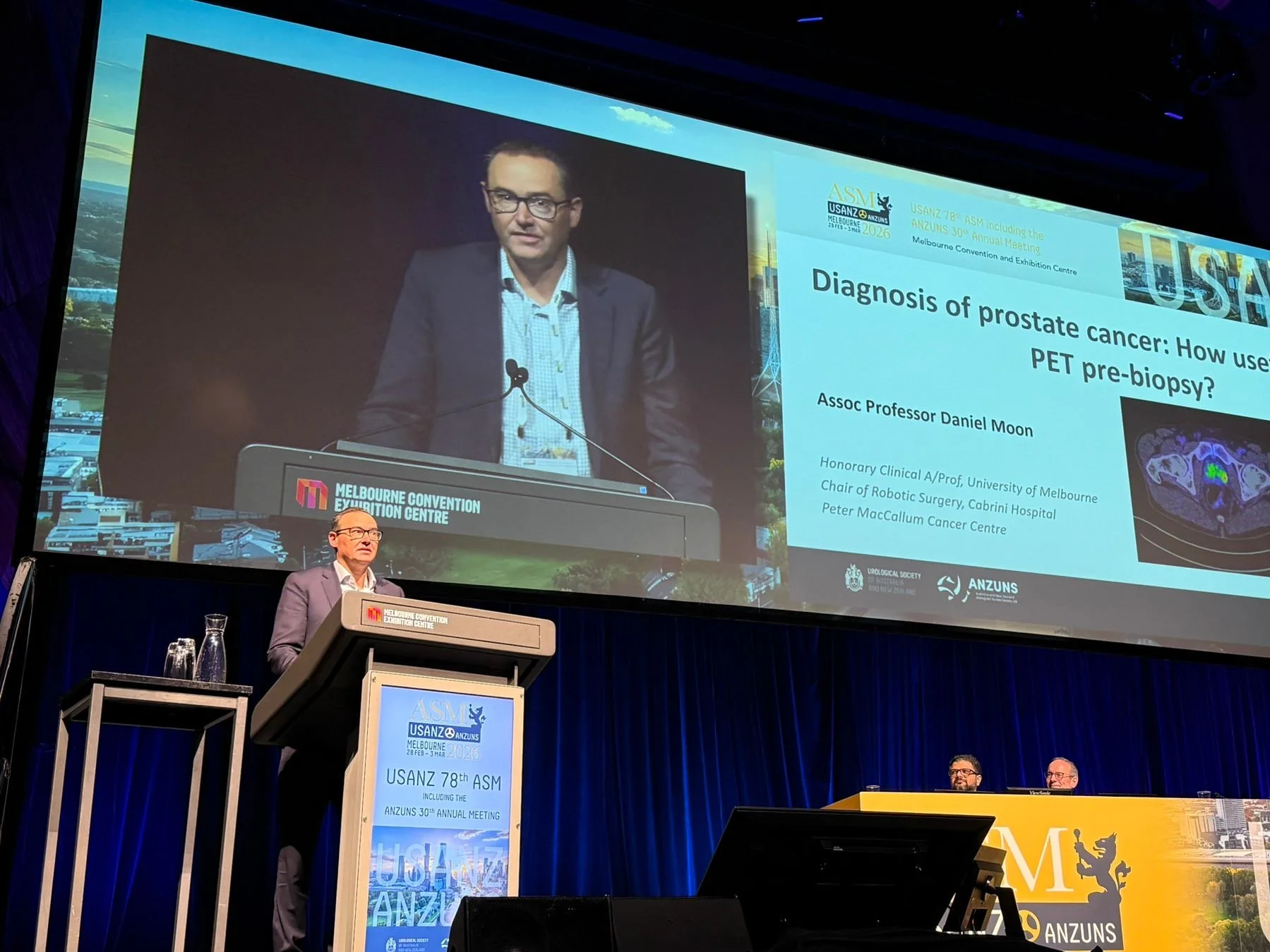
A/Prof Moon is involved in a number of projects improving options for kidney cancer management
Robotic surgery - Since leading the first Australian robotic partial nephrectomy program in 2010 A/Prof Moon has published and presented widely on techniques to remove tumours from the kidney using keyhole surgery. He has published the largest Australian series of robotic kidney surgery and more recently presented techniques to preserve the kidney even in the most challenging situations
Combination therapy - for more advanced tumours A/Prof Moon is involved in trials of novel drugs and targeted radiation to reduce the risk of recurrence








Treatment Options
Is a biopsy required?
A diagnosis can be made pre-operatively, through needle biopsy, however as over three-quarters of solid kidney tumours are cancerous and biopsies are not always conclusive, in some circumstances it may be more practical to proceed directly to surgery and make the diagnosis on the removed specimen.
-
As small tumours grow slowly and the risk of spread is extremely low (<5%) while under 4cm in size, it is not uncommon to simply monitor the growth with scans (eg every 6 months), particularly if other health problems are present that would make treatment riskier than the tumour itself.
Treatment can be offered if the tumour grows more rapidly, but in fact many people, particularly elderly patients, are monitored for years without ever requiring any treatment at all.
-
If treatment is required, surgery is the gold standard.
Robotic surgery has revolutionised the approach - allowing most patients to be treated with keyhole surgery and many tumours to be removed with preservation of the kidney (partial nephrectomy). Even when larger tumours require removal of the entire kidney (radical nephrectomy) this can most often be achieved through keyhole surgery through the use of robotic techniques
-
Depending on the size and location of the tumour, it may be possible to destroy the tumour without surgery at all. This can be done through either:
- Targeted (stereotactic) radiation
- Radiofrequency ablation - using an electric current
- Cryotherapy - freezing the tumour
What is the likely diagnosis?
What is the best approach?
Can the kidney be preserved?
What other treatments could be considered?
— Questions to answer in deciding the optimal management
Laparoscopic and Robotic Surgery
To avoid a large incision to remove the kidney tumour, keyhole (laparoscopic) surgery has steadily replaced open surgery in most situations except where the cancer is very large or advanced. Robotic surgery is a form of keyhole surgery using more sophisticated instruments and three-dimensional cameras to remove just the tumour itself, reconstructing and preserving the kidney.
Systemic Therapy
Unfortunately, kidney cancer has sometimes spread to distant sites in the body (metastasized) by the time of diagnosis. It is usually incurable at this stage, but with the development of more effective systemic treatments the disease can be controlled often for long periods of time. It is worth discussing this form of treatment with your urologist or medical oncologist (cancer specialist) as there may also be the option of involvement in clinical trials of newer drugs.
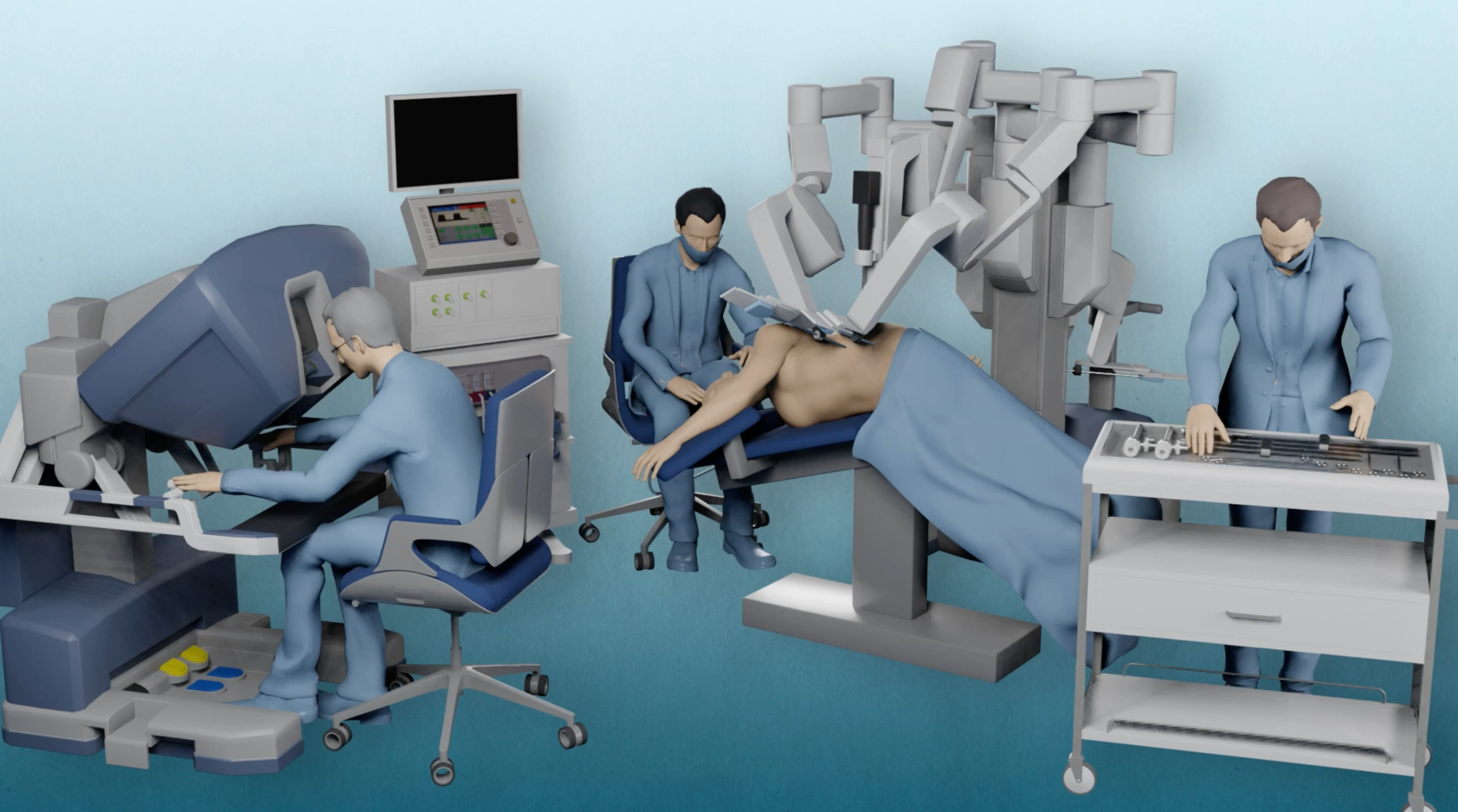
(courtesy EAU https://patients.uroweb.org)
Assoc Prof Daniel Moon has been responsible for developing these techniques, publishing the first Australian series of robotic partial nephrectomy, reporting high success rates and a low risk of complications.1
1. Kucharczyk J, Basto M, Landau A, Graves R, Everaerts W, Birch E, Murphy D and Moon D. Early experience and operative technique of robotic-assisted partial nephrectomy in Australia. ANZ J Surg
Get in touch:
03 9967 0198
-
Call us on 03 9967 0198 or use our contact form to send us your details. We will get in touch to arrange your initial consultation appointment.
When making a booking, please let our friendly staff know if you would prefer an in-person or telehealth appointment.
-
We are conveniently located opposite Cabrini Hospital Malvern at 198 Wattletree Road, Malvern with parking on site.
Also consulting at:
134 Bay st, Brighton with parking on site
Telehealth consultations available upon request
Please arrive 10 minutes before your scheduled appointment time as there can be some documentation to attend to before your appointment.